Preparing to Move a Loved One and How to Make the Best of It

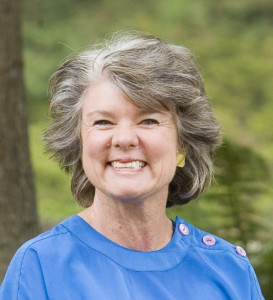
Professional Geriatric Care Manager, Eldercare Services, Jean Tokarek, MPA, CMC

Professional Geriatric Care Manager, Eldercare Services, Jean Tokarek, MPA, CMC

A few months ago, my siblings and I were getting ready to move our mother from her homestead, where she had lived for 48 years, to a vibrant assisted living community in another town. As we were trying to accomplish this task, it made me feel like Mom was moving away to college—the big difference being college at 18 versus assisted living at age 85. 

Think about it.  You select a college, hoping it will meet your educational, social, spiritual and political needs.  You may be going to a college town that has a different culture, meeting new people and making new friends.  Not to mention your dorm room space will be a lot smaller than the old homestead that you grew up in.   There will be structure, such as meals and classes at appointed times.  This scenario is very similar to an assisted living community.  The problem is that our parents may be frail, have complex medical conditions, unfamiliar with their new surroundings and/or not be as able bodied to accomplish the task on their own.

For starters, you may need to get the house ready to be put up for sale.  What belongings, keepsakes and furniture will she take with her?  How do you sort out the junk from the treasures?  A family activity that can be rewarding, as well as bond parent and child, is to go through household items, clothing and keepsakes together.  This will give mom a chance to reminisce, as well as take stock of her life.  Once the items are chosen to move, family members can help mom make the little apartment she will move into homey and inviting.

A parent’s medical oversight is key to their health and well-being.  If she is moving to a new town, new doctors will have to be found.  Does the assisted living community have a doctor on site?  Are there relatives, friends and/or colleagues in the area that can recommend new doctor(s)?  Can her existing doctor(s) make referrals?  Is her medical condition so complex that she may need a primary care doctor, cardiologist, neurologist, dermatologist, as well as dental, eye and foot care?  A way to get mom on the right road is for a family member (or other advocate such as a Professional Geriatric Care Manager) to accompany mom to the first visit with her new primary care MD and then see that all the physicians communicate with each other.

Making new friends may be an overwhelming proposition at the age of 85, especially if the community has over 100 residents.  Before mom moves in, be sure to touch base with the Directors to make sure that mom is introduced to people that have her special areas of interest, such as the gardeners, bridge players, classical music listeners, museum goers.  It is easy for a staff member to seat mom next to a gardener at the dinner table, if that is her thing.   A staff member can encourage mom to attend the exercise program or museum outing that other residents will be attending, if that is her special area of interest.  Once this is done, friendships can be made early and develop naturally.

Moving an older person to an unfamiliar setting can be a daunting task as we all become creatures of habit when we get older.  If we take the needs of our loved ones as the first priority and see them through in getting them settled, transition from home to residential care will be easier and make this chapter of her life one that our parent remembers fondly and can be spiritually rich.

Mom Knows Her Memory is Poor

Founder and Executive Director Linda Fodrini-Johnson, MA, MFT, CMC

Founder and Executive Director Linda Fodrini-Johnson, MA, MFT, CMC

Last night, after my mother called and could not remember why she made the call, she said, “My memory is really bad.” This is the first time she admitted to her memory loss since her stroke. However, she did make the call 15 minutes before Jeopardy and told me that is why she called, knowing I would be watching that program in a few minutes.

The strategic planning of when to call and what the other might be doing is part of the executive functioning of the brain and, as a clinician, it is a clue to me on the difference between someone with Alzheimer’s dementia and someone with a vascular dementia. Clients with Alzheimer’s disease would have just called at any time as they are often unaware of the needs or interests of others.

My response to Mom was to say, “Well, we are working on getting some of your other brain cells to recover.” That might not be a possibility and she might always have a severe short term memory problem – but as a family member and a professional, I never want to take away hope. Some might say that is not being honest and I that I should have just said, “You had a stroke so your memory is not going to get any better.” But, to tell you the truth, I have seen some people adapt and find ways that work for them that assist with their memory – such as writing themselves notes or consulting their calendars often.

If you get into “concrete reality” without considering the “emotional reality” in your responses, your family member could end up feeling bad and have a bruised self-esteem. Emotional assaults (even minor ones) are remembered longer. It isn’t the event or the words spoken that caused the bruise to the self-esteem, it is the feeling the person had at the time of the incident that stays with them.

When a person with any dementia leaves an interaction feeling dumb, inept, confused, scared or angry – that feeling could stay for days and cause behavioral issues that surprise family members or caregivers. It is up to us, family and professional caregivers to always be aware of how we speak and what the emotional impact might be on the other. If safety is at risk you must act quickly and not have the time to protect the self-esteem in the moment. We are all human and will make mistakes – if we do just move on and look for some positives.

In my mother’s case we just laughed and moved on in our conversation talking about pleasant things and activities. I left the door open for her to call me anytime – but she has to write down what she needs first and then dial my number.