Guilt & Parent Caregiving

 
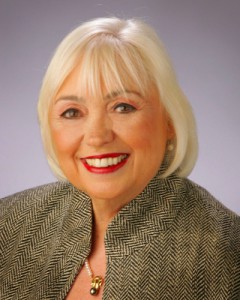
Founder and Executive Director Linda Fodrini-Johnson, MA, MFT, CMC

Founder and Executive Director Linda Fodrini-Johnson, MA, MFT, CMC

View the video blog: Guilt and Parent Caregiving

Recently in talking with a caregiver who takes care of her mother, father and mother-in-law, the ever present “guilt work” came into the conversation.

“Why”, said the daughter, “do I never feel like I do enough or do the right thing”?  Well, it is more complicated than this simple answer but, the answer is, you just can’t fix it! 

The majority of us have a tendency to want to make something or someone better, to make those who are hurting or suffering from progressive illness, like a dementia, fell better or be less anxious.  A parent can have an uncanny way of making us feel like we didn’t stay long enough or get just the right fix to whatever the problem was that engaged us in the interaction.  This is often not so much because you have a controlling parent but because of the parent’s anxiety, fear or loneliness.

It is hard to know what the pull is but, if you leave feeling guilty it is often because you can’t truly make the internal feeling that they have go away, no matter what your skills, education, experience or love are.  Those who are successful at balancing caregiving with self-care know they can’t fix all problems.  What you can do is be “present” when you are with your parent.  Express your love and admit you don’t have all the answers.  Do your best knowing you can’t fix everything!

Memory Loss & Its Impact on Individuals & Families

Founder and Executive Director Linda Fodrini-Johnson, MA, MFT, CMC

Founder and Executive Director Linda Fodrini-Johnson, MA, MFT, CMC

When a family member is diagnosed with a progressive dementia, it is challenging not only for the “patient” but even more so for the entire family system.  Diseases such as Alzheimer’s impact everyone in the family and sometimes in the community (if the person doesn’t have family).

Those who oversee the care of someone with a dementia, should schedule regular appointments with the primary care physician and bring to the attention of the doctor any changes in behavior, which can sometimes be a signal of illness.

Over ½ of the primary caregivers caring for someone with a dementia suffer themselves from untreated depression.  So, it is just as important that the family caregiver be seen by a primary physician regularly as well.  Untreated depression and stress can lead to cardiac events such as heart attacks or strokes.  Self-care becomes more important when you are a primary family caregiver.

Family caretakers should connect with a support group and enroll in educational courses that prepare them for the caregiving journey.   Those who participate in day care programs, support groups, and have a spiritual resource cope better.

Quality in life comes one day at a time and it is important for the caregiver, as well as for the person with a memory loss disorder, to find pleasure in every day.  Make this a goal, even if it is a short walk in a well cared for park or sitting watching children in the playground.   Caregivers should cultivate as well as keep interests in activities that have always given their life pleasure.

In working with family caregivers, I often tell them to try to budget dollars and time that they will spend each month on keeping pleasure in their lives, despite the journey of being a caretaker to someone with a dementia.  The budget of dollars allows them to spend money on day care, home care or respite stays so that they can renew themselves with quiet time or a personal interest such as travel, entertainment or one-on-one time with a grandchild.  Even though these dollars seem to be spent on them it actually allows one to care for someone a longer period of time because they are finding pleasure in life at the same time as providing 24/7 care for another.

Spouses and Caregiving Burdens

Founder and Executive Director Linda Fodrini-Johnson, MA, MFT, CMC

Founder and Executive Director Linda Fodrini-Johnson, MA, MFT, CMC

Why does the spouse try to do it all without hiring help or allowing others to assist?  Is it the “for better or worse” vows of the marriage ceremony?  Is it that they are fearful they will be judged by others if they share the care?  Or, do they feel guilty if they self-care?

Spouses often end up with stress and other health related issues and may die before the person they are caring for. How might professionals or family members help?

Often the only time a spouse will finally give in is if someone in the same situation tells them their story and convinces them of the importance of self-care.  Sometimes a “caregiving inventory” will help them self diagnose the need for some self care.  Support groups are great places to get this type of advice and direction.

Geriatric Care Managers may be able to shine a light on the need for self-care that family members can’t.  It is often hard for a parent to take advice from an adult child.  Also, the family doctor can stress the importance of respite breaks for the caregiving spouse. Regardless of the source of the convincing, self-care is paramount for those who are acting as caregivers for others.

Family Caregivers – Share the Care

Founder and Executive Director Linda Fodrini-Johnson, MA, MFT, CMC

Founder and Executive Director Linda Fodrini-Johnson, MA, MFT, CMC

Often families try to do all the care themselves out of love or necessity – or maybe “control”.  Whatever it is that causes you to be the only one caring for a dependent older adult – you need to know the importance of finding a balance and sharing the care.


Caregiver research shows that at least 50% of those caring for a family member with Alzheimer’s disease suffer from untreated clinical depression.   Depression can lead to serious physical health issues.


Learn to ask for help from other family members.  Classes, support groups or a consultation with a Geriatric Care Manager can help you with this new way of being assertive.   Trying to be the only caregiver may interfere with  your relationships with other family members.  Not only do you miss that intimacy with spouse/children/extended family, but also you could be depriving the frail family member of the benefits or enrichment from a community respite or activity program. 


Ask for help – you are important to the well being of your ill family member.  A healthy you will better care for another.  Self-care is a challenge and professional Geriatric Care Managers can help you get the balance you need as a family caregiver.

Anger and Caregiving

Founder and Executive Director Linda Fodrini-Johnson, MA, MFT, CMC

Founder and Executive Director Linda Fodrini-Johnson, MA, MFT, CMC

Caring for another 24/7 and giving your all to one you love can be exhausting, frustrating and bring about “anger” in ways that surprise you, the family caregiver.

 Asking yourself, “Was that me?”, after hearing yourself shout at someone who doesn’t understand due to a cognitive loss or dementia.   Or, maybe you find yourself throwing something or being a little rough in dressing or caring for another.

 Losing your patience is normal.  Looking at that loss of patience as a “red flag” is helpful. It is a signal that you need a little “self-care” and it is time to bring in help or take a break.

 Some helpful hints in managing anger:

 1)         Be sure you can say at the end of each day that you did something just for yourself like a hot bath, reading for 30 minutes, a walk with the dog etc.

2)       Acknowledge that it is ok to lose your patience.  It is not ok to have this frustration transform into anger that could put you and the other in danger.

3)       Join a support group.  Get affirmation for your frustration from others in the same boat.

4)      Take an “anger management” class.

5)       Ask for help.  Be specific if asking family members to share the caring.  Say to your sister, “Could you sit with Dad on Tuesday from noon to five while I take a Yoga class”?  Don’t just say, “I need help.”

6)       Hire asisstance and use the time off for self-care even if this is only 2-4  hours once a week.

7)        Forgive yourself and make “balance” a part of each day by finding ways to give to yourself.

 Copyright:  Linda Fodrini-Johnson 2010

Baby Boomers Trading Retirement Leisure for Parent Care?

Founder and Executive Director Linda Fodrini-Johnson, MA, MFT, CMC

Founder and Executive Director Linda Fodrini-Johnson, MA, MFT, CMC

This new decade will bring many of the 76 million Baby Boomers who approach retirement, with the dreams and visisons of travel, volunteerism, and enjoying family redirected and derailed, to the reality of aging parents and their increasing dependency.

 It is my recommendation that every pre-retirement class, workshop or planner cover, for the aging baby boomer generation how to find a balance between parent care and actualizing their dreams.  The later years also bring progressive chronic illnesses to baby boomers, who on the whole are healthier than their parents at retirement, but never the less have a body that is aging or a genetic package that can’t be redesigned (or at least not this year)!

 So, with our own aging and our own dreams of what retirement holds for each of us comes the question, how do I take care of my parents and still have fulfilling relationships and enjoy the “golden” years?

 It could change the course of your “golden years” to find an experienced counselor or Professional Certified Geriatric Care Manager to review a checklist of how to find balance in life.  This can go a long way toward life satisfaction.  After such a meeting, you will need to commit to self-care that will help prevent burnout, resentment and even depression.   You should also have someone, a friend, spouse or counselor who you talk with for accountability – it is so easy to be pulled into the drama and needs of aging family members.

 Remember, balance is not eliminating your ability or willingness to support and care for your parents – but it means finding that time to get out on the golf course, take a hike, play with the grandkids or learn a new language.

 If you live in the San Francisco Bay Area we are here for you.  If you live in another part of the country send us a query and we will find someone for you to talk with.

 Happy Trails to you!

Making the Last 10 Years Like the First 10 Years

Professional Geriatric Care Manager Supervisor Eileen Zagelow, BA, CMC

Professional Geriatric Care Manager Supervisor Eileen Zagelow, BA, CMC

A client once told me that life would be better if the last ten years were lived first and the first ten years were lived last. 

 Since that experience I feel challenged to provide some sort of delight to the clients we serve.  One of the most satisfying ways to do this as a Care Manager is to relieve families and friends of some of their functional duties.  This allows the caregiver time, energy and opportunity to provide some delightful experiences of their own.  Supporting contentment, companionship and the occasional high is very gratifying to both the giver and receiver.

 The moments don’t have to be very big, very long or even very often.  Exhilarating and/or meaningful should be the goal.  Families are often too exhausted to find energy for such pursuits.  By handing over the controls at least for a while the caregiver can replenish themselves and “pay it forward”. 

 Some of the following experiences come to my mind.  Enjoying a 90th birthday cruising along in a convertible, top down, complete with sunglasses and baseball hat.  (Of course normal precautions need to be employed!)  A visit to Pier 39 with a ride on the carousel.  A drive through the wine country or over the Golden Gate Bridge. For some, the sheer pleasure of sand running through the toes is a wonderful time.

 We create happiness when we feel alive and blessed ourselves.  Sharing the burden is immeasurable in the rewards it reaps.